

Summary
✔ Healthy weight gain emphasizes lean tissue development, metabolic balance, and adequate micronutrient intake — not rapid fat accumulation.
✔ The best supplements provide structured calorie delivery, sufficient protein, and transparent labeling aligned with adult nutritional needs.
✔ Product selection should consider digestive tolerance, activity level, and overall dietary intake.
✔ Supplements are supportive tools and should complement balanced meals rather than replace whole foods.
✔ Individuals with medical conditions should seek professional guidance before initiating supplementation.
Play the Audio
Introduction
Best weight gain supplements for adults are those that support gradual, physiologically appropriate increases in body mass while preserving metabolic stability. Sustainable weight gain is not achieved through excessive calorie loading alone. Instead, it requires structured intake, sufficient protein availability, resistance stimulus, and micronutrient adequacy.
In clinical nutrition and supplement review settings, adults who struggle to gain weight often present with low appetite, elevated metabolic demand, inconsistent meal patterns, or recovery-related nutritional gaps. When food intake alone becomes difficult to maintain consistently, carefully selected oral nutrition supplements can provide measurable, controlled nutrient support.
This guide examines evidence-informed supplement categories, their advantages and limitations, and practical selection criteria for adults seeking structured weight gain.
What Defines the “Best” Weight Gain Supplement?
A supplement may be considered appropriate when it demonstrates:
✔ Adequate protein per serving
✔ Controlled calorie density
✔ Balanced carbohydrate contribution
✔ Essential vitamins and minerals
✔ Transparent ingredient disclosure
✔ Clear adult dosing guidance
✔ Digestive tolerance
The objective is not maximum calorie delivery, but targeted nutritional reinforcement aligned with individual needs.
What Is Healthy Weight Gain?
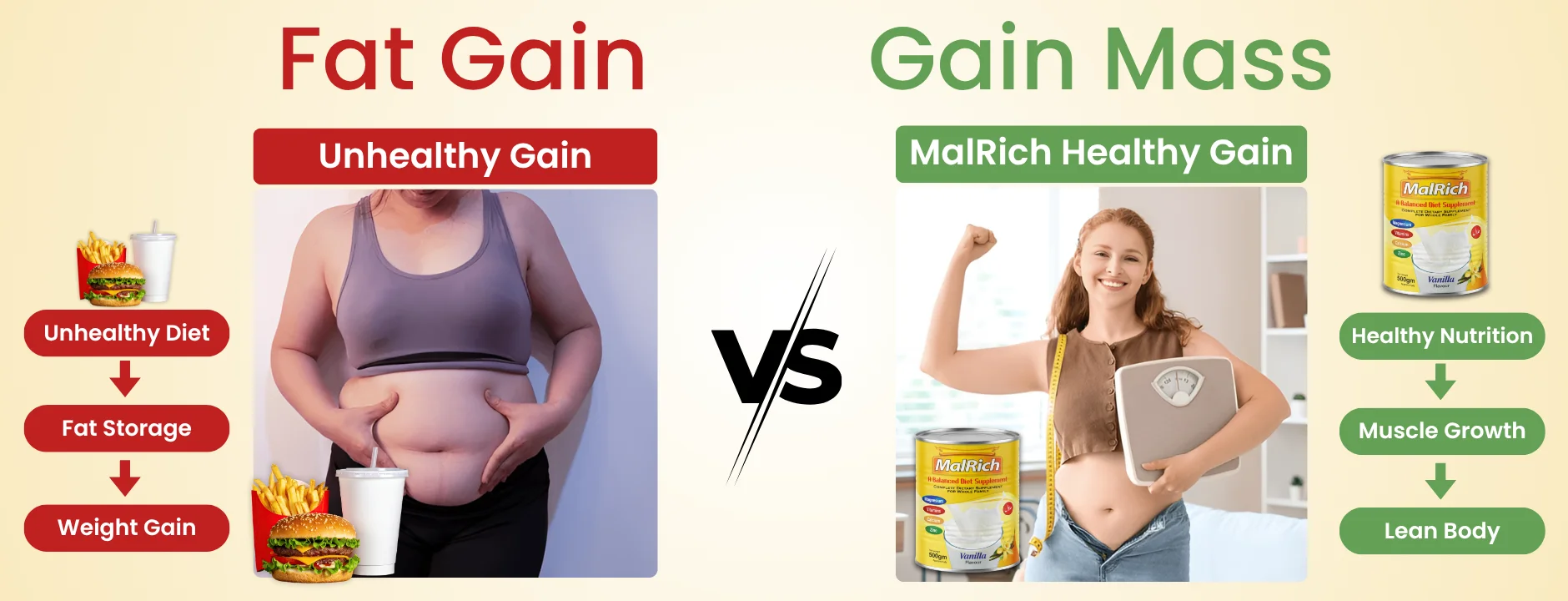
Healthy weight gain prioritizes functional body composition — supporting lean mass development while minimizing disproportionate adipose storage.
Key Characteristics:
✔ Gradual calorie surplus (approximately 300–500 kcal/day)
✔ Daily protein adequacy
✔ Resistance-based physical activity
✔ Micronutrient sufficiency
✔ Consistent intake patterns
Unhealthy Weight Gain Often Involves:
✖ Excess added sugars
✖ Ultra-processed calorie sources
✖ Poor nutrient density
✖ Large, uncontrolled calorie surpluses
✖ Limited physical activity
The goal is improved strength, resilience, and nutritional adequacy — not simply increased scale weight.
The Physiology Behind Supplement-Supported Weight Gain
Weight gain occurs when energy intake consistently exceeds energy expenditure. However, the composition of that energy significantly influences body composition outcomes.
Muscle development requires that muscle protein synthesis exceeds protein breakdown. This process depends on:
- Essential amino acids
- Adequate total protein intake
- Mechanical stimulus (resistance training)
- Recovery and sleep
- Hormonal balance
Authoritative guidance from the American College of Sports Medicine highlights the importance of sufficient protein intake in physically active adults to support muscle maintenance and growth.
Excess calories without adequate protein and mechanical stimulus are more likely to promote fat accumulation rather than lean tissue development.
Why Some Adults Require Supplement Support
Clinical observations suggest several factors may interfere with adequate weight gain:
- Naturally elevated metabolic rate
- Reduced appetite
- Gastrointestinal sensitivity
- High physical expenditure
- Irregular meal timing
- Nutritional deficiencies
- Recovery from illness
In such scenarios, structured oral nutrition supplementation may provide practical assistance in achieving consistent intake.
Why Some Adults Require Supplement Support
Clinical observations suggest several factors may interfere with adequate weight gain:
- Naturally elevated metabolic rate
- Reduced appetite
- Gastrointestinal sensitivity
- High physical expenditure
- Irregular meal timing
- Nutritional deficiencies
- Recovery from illness
In such scenarios, structured oral nutrition supplementation may provide practical assistance in achieving consistent intake.
Categories of Weight Gain Supplements for Adults
1. Balanced Nutrition Powders
Best For: General adult nutritional support and mild calorie gaps
These formulations typically provide moderate calories (250–400 kcal per serving), 15–25 g protein, carbohydrates, fats, and added micronutrients.
Advantages
- Macro and micronutrient coverage
- Portion-controlled intake
- Often easier digestive tolerance
- Suitable for daily use
Limitations
- Moderate calorie density
- Quality varies across brands
Balanced nutrition powders are often suitable for adults seeking gradual weight stabilization rather than rapid mass gain.
2. Mass Gainers
Best For: High calorie needs or intense training demands
Mass gainers may provide 500–1,200+ kcal per serving and contain higher carbohydrate concentrations.
Advantages
- Efficient calorie delivery
- Useful for individuals with high energy expenditure
- Convenient for limited meal frequency
Limitations
- Potential for added sugars
- Large serving sizes
- Digestive discomfort in some individuals
- Higher fat gain risk if intake is not monitored
These products may be appropriate for physically active adults with elevated energy expenditure, but require careful portion management.
3. Protein Supplements
Best For: Muscle-focused weight gain
Common formats include whey, casein, and plant-based protein powders. These typically provide 20–30 g protein per serving with lower calorie density.
Guidance from the National Institutes of Health Office of Dietary Supplements emphasizes evaluating ingredient transparency and appropriate intake levels when selecting protein products.
Advantages
- Supports muscle protein synthesis
- Lower fat gain risk
- Flexible integration into meals
Limitations
- Insufficient alone for large calorie surpluses
- Requires adequate total energy intake
Protein supplements are particularly useful when combined with resistance-based training.
4. Oral Nutrition Supplements (Clinically Structured Formulas)
Best For: Adults with reduced appetite or documented intake gaps
These formulas provide balanced macronutrients plus essential vitamins and minerals in controlled portions.
Clinical nutrition frameworks such as those from ESPEN emphasize individualized planning based on health status and metabolic needs.
Advantages
- Structured nutrient delivery
- Portion control
- Suitable for recovery-related intake support
Limitations
- Should not replace comprehensive meals
Medical evaluation required for certain conditions
Evidence-Informed Intake Targets
Although individual requirements vary:
- Calorie Surplus: ~300–500 kcal/day
- Protein Intake: ~1.2–2.0 g/kg body weight
Higher protein ranges may benefit resistance-trained individuals. Lower ranges may suffice for sedentary adults.
Pros and Limitations of Weight Gain Supplements
Advantages
✅ Convenient calorie reinforcement
✅ Helpful for low appetite
✅ Structured intake measurement
✅ Supports lean mass when paired with exercise
✅ Time-efficient for demanding schedules
Limitations
⚠ Not substitutes for whole foods
⚠ Overconsumption may promote fat gain
⚠ Some products contain unnecessary additives
⚠ Not suitable for all medical conditions
⚠ Manufacturing standards vary
Comparison: Common Supplement Strategies
Category
- Balanced Nutrition Powder
- Mass Gainer
- Protein Powder
- Oral Nutrition Supplement
Best For
- Mild intake gaps
- High energy needs
- Muscle-focused goals
- Reduced appetite
Key Strength
Moderate, balanced calories
High calories for faster surplus
High protein for lean mass
Quality and transparency vary
Consideration
Fat gain risk if uncontrolled
Needs adequate total calories
Meal complement only
Balanced macro-micros
How to Choose a High-Quality Weight Gain Supplement
Prioritize products offering:
✔ Transparent labeling
✔ Clear macronutrient breakdown
✔ No undisclosed proprietary blends
✔ GMP-compliant manufacturing
✔ Third-party quality testing when available
✔ Appropriate calorie-to-protein ratio
✔ Clear serving instructions
Avoid selecting solely based on calorie quantity. Evaluate overall nutrient balance.
Who May Benefit From These Supplements?
- Underweight adults
- Individuals with low appetite
- Adults with elevated metabolic demands
- Physically active individuals targeting lean mass
- Individuals recovering from illness (with supervision)
Who Should Seek Professional Evaluation First?
Medical consultation is advised for individuals with:
- Diabetes
- Kidney disorders
- Liver disease
- Hormonal conditions
- Active gastrointestinal disease
- Pregnancy or breastfeeding
Ongoing prescription medication use
Practical Strategy for Structured Weight Gain
Medical consultation is advised for individuals with:
- Assess baseline calorie intake.
- Introduce a moderate daily calorie surplus.
- Ensure adequate protein distribution across meals.
- Incorporate resistance-based activity 2–4 times weekly.
- Monitor body weight and functional strength every 2–4 weeks.

Frequently Asked Questions
Are weight gain supplements safe for daily use?
When formulated for adult use and consumed as directed, many are intended for routine intake.
Will supplements cause fat gain?
Body composition outcomes depend on total diet, protein adequacy, and physical activity.
Is exercise required?
Resistance-based training significantly improves the likelihood of lean mass development.
How long does healthy weight gain take?
Gradual changes over several weeks to months are typical.
Can supplements replace meals?
No. They should complement balanced dietary intake.
.
Final Takeaway
The best weight gain supplements for adults are those that provide balanced calorie support, adequate protein, and micronutrient sufficiency within a structured nutritional framework.
Mass gainers may benefit individuals with high energy demands, while balanced nutrition powders and oral nutrition supplements often offer more controlled, sustainable support for general adult use. Protein supplements are particularly effective when paired with resistance training.
Ultimately, supplementation should serve as a targeted tool within a comprehensive nutrition strategy — not a replacement for informed dietary planning.
Medical Disclaimer
This article is intended for educational purposes only and does not constitute medical advice. Individual nutritional needs vary. Professional medical guidance should be sought before initiating significant dietary or supplementation changes.
References
This article references guidance from internationally recognized healthcare and nutrition organizations.
National Institutes of Health (NIH)
Office of Dietary Supplements – Dietary Supplement Fact Sheets for Health Professionals.
Available from: https://ods.od.nih.gov
American College of Sports Medicine (ACSM)
Protein Intake and Muscle Health Guidelines.
Available from: https://www.acsm.org
ESPEN (European Society for Clinical Nutrition and Metabolism)
ESPEN Guidelines on Clinical Nutrition.
Available from: https://www.espen.org
World Health Organization (WHO)
Nutrition and Healthy Diet Resources.
Available from: https://www.who.int
Download the Printable Clinical Guide
Access a professionally formatted PDF version of this article for offline review, clinical reference, or educational use.
⬇️ Download the Best Weight Gain Supplements for Adults – Clinical Guide (PDF)
This document is provided for educational purposes only and does not replace individualized medical or nutritional advice.

Author
Naeem Haider
Licensed Pharmaceutical Professional | Supplement Compliance Specialist
With professional experience in pharmaceutical distribution and supplement regulatory practices, Naeem Haider focuses on promoting safe, responsible, and evidence-aligned use of health supplements. His work emphasizes clinical accuracy, transparent healthcare communication, and informed decision-making to strengthen public confidence.